
The wrong handgun ammo shows up fast – tighter groups turn into flyers, recoil gets snappy, and a pistol that usually runs clean starts acting picky. If you’re figuring out how to choose handgun ammo, the real goal is simple: match the cartridge to your handgun, your purpose, and the performance you actually want.
That sounds straightforward until you see how many options are on the shelf. Full metal jacket, hollow point, standard pressure, +P, different bullet weights, different brands, different price points. The best choice is rarely the most expensive box or the one with the flashiest claims. It is the load that fits what you’re doing and runs reliably in your firearm.
How to choose handgun ammo by purpose
Start with use case, because that narrows the field faster than anything else. A round built for affordable range practice is not the same round you want for personal defense, and neither may be ideal for handgun hunting.
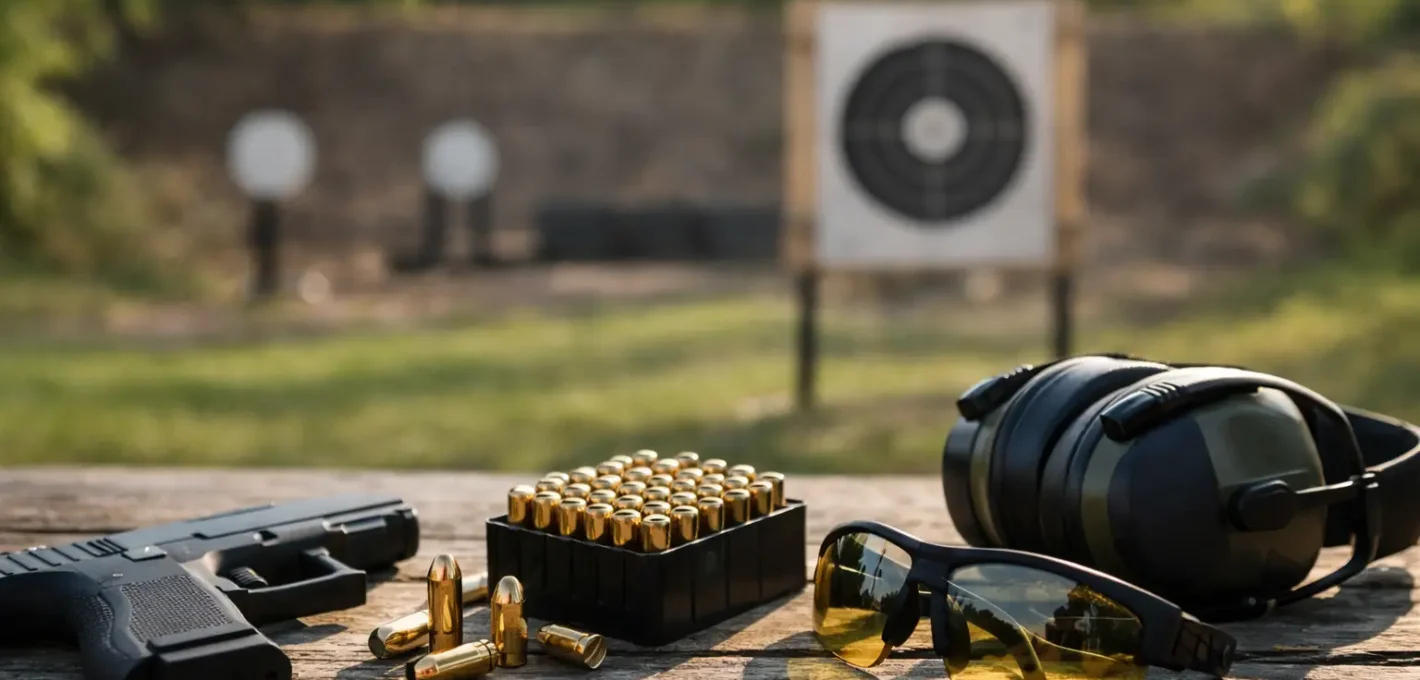
For target shooting and training, most shooters are best served by full metal jacket ammunition. FMJ is usually more affordable, widely available, and consistent enough for high-volume practice. It also tends to feed well in many semi-auto pistols, which matters when you’re trying to build repetitions instead of troubleshoot malfunctions.
For self-defense, jacketed hollow points are the standard choice. The reason is performance, not marketing. A quality hollow point is designed to expand more reliably in soft tissue and reduce the risk of over-penetration compared with many FMJ loads. That does not mean every hollow point performs equally well, and it does not mean every handgun likes every defensive load. Reliability still comes first.
For hunting, the answer depends heavily on caliber, game size, and local regulations. Some handgun cartridges are suitable for small game or predator use, while others are selected for larger game where lawful and appropriate. In that setting, bullet construction becomes critical. Expansion, penetration, and retained weight matter more than saving a few dollars per box.
Start with the caliber your handgun is chambered for
This is the non-negotiable step. Use only the exact cartridge your handgun is designed to fire, as marked on the barrel or slide and confirmed in the owner’s manual. Close is not close enough with ammunition.
A 9mm Luger is not the same as .380 Auto. A .38 Special revolver is not automatically a .357 Magnum unless the firearm is specifically chambered for it. Even rounds with similar names can have different pressures, dimensions, and safe-use standards. If there is any doubt, stop and verify before you buy.
Once the caliber is confirmed, then you can compare bullet weights and load types within that chambering. That’s where real fine-tuning begins.
Bullet type matters more than most new buyers expect
If you are learning how to choose handgun ammo, bullet type is where performance starts to separate.
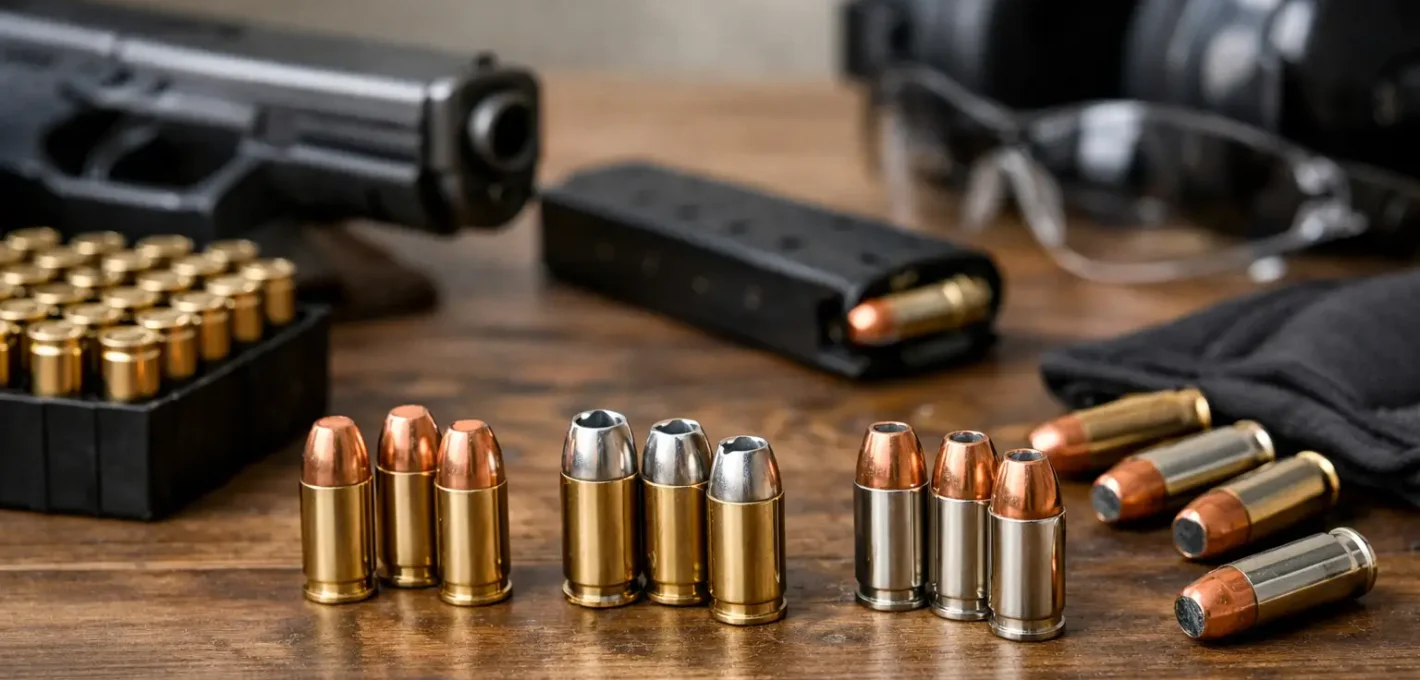
FMJ is the workhorse for practice. It is typically the better value for range time, and it usually gives shooters a consistent training round without beating up the budget. For most people, this is the ammunition to buy in larger quantities.
JHP, or jacketed hollow point, is the go-to for defensive carry and home defense. Better defensive loads are engineered for controlled expansion and dependable penetration. The trade-off is cost. Premium defensive ammunition is more expensive, which is why many shooters practice mostly with FMJ and then function-test their carry load enough to trust it.
You may also see soft point, hard cast, frangible, and specialty loads. These have niche applications. Some are aimed at hunting, some at reduced ricochet risk in certain training environments, and some at specific backcountry defense roles. Specialty ammo can be highly effective, but only when it matches a real need.
Bullet weight changes recoil and feel
Within the same caliber, bullet weight affects how the handgun shoots. In 9mm, for example, common weights include 115-grain, 124-grain, and 147-grain loads. All can work well, but they do not feel identical.
Lighter bullets often produce a different recoil impulse than heavier bullets, and point of impact can shift slightly depending on the load and handgun. Some shooters find lighter loads feel faster and flatter. Others prefer heavier bullets because the recoil feels smoother or because their pistol groups better with them. It depends on the firearm and the shooter.
This is why test firing matters. If your handgun prints tighter groups with a 124-grain load and cycles it flawlessly, that tells you more than a spec sheet ever will.
Standard pressure vs +P
You will eventually run into +P ammunition, especially in defensive calibers. +P loads are loaded to higher pressure than standard-pressure rounds, which can increase velocity and, in some cases, terminal performance.
That extra performance comes with trade-offs. Recoil is usually sharper, muzzle blast can increase, and wear on the firearm may be greater over time. Not every handgun is rated for +P ammunition, and not every shooter benefits from it. If faster follow-up shots and better control matter more than a modest velocity gain, standard pressure may be the smarter choice.
Check your owner’s manual before using +P. If the handgun is rated for it, test it thoroughly before relying on it.
Reliability beats hype every time
A premium box means nothing if your pistol will not run it. The best handgun ammo for your needs is the load that feeds, fires, extracts, and ejects consistently in your specific firearm.
This is especially important with defensive ammunition. Before carrying a load, run enough of it through the handgun to confirm dependable function. You want confidence that the round cycles cleanly, the slide locks back when it should, and accuracy meets your standard. A load with a great reputation is still the wrong load if your handgun dislikes it.
Brand reputation matters, but function in your firearm matters more. Established manufacturers usually offer stronger quality control and more consistent performance, which is one reason practical buyers often stick with trusted names.
Accuracy is personal, not universal
Two pistols of the same model can show preferences for different loads. Barrel length, manufacturing tolerances, sight setup, and even shooter technique all influence results.
For range work, the right ammo is the one that gives reliable performance and repeatable groups at a price that supports steady practice. For defense, acceptable accuracy must come alongside reliability and suitable terminal performance. For hunting, accuracy expectations should be even higher because shot placement is everything.
A smart approach is to buy a few different loads within your caliber and compare them side by side. Keep notes on group size, recoil feel, cleanliness, and function. That small amount of testing can save a lot of guesswork later.
Price matters, but value matters more
Ammo cost adds up fast, especially if you train regularly. That is why many experienced shooters split their buying into categories: affordable FMJ for volume practice and premium purpose-built loads for carry, duty, or hunting.
This is not cutting corners. It is buying strategically. You want enough practice ammunition to stay sharp, but you also want a defensive or hunting load that delivers when performance matters most. The winning move is balance.
When you shop, compare more than price per box. Look at bullet type, grain weight, manufacturer reputation, and intended use. A lower sticker price is not a bargain if the ammo runs dirty, groups poorly, or causes stoppages.
Storage and consistency count too
Once you find a load that works, consistency is a real advantage. Switching between dramatically different loads all the time can change point of impact and recoil feel, which is not ideal if you want predictable performance.
Store ammunition in a cool, dry place and keep boxes labeled. If you carry defensive ammo, rotate it periodically, especially if it has been exposed to sweat, lint, temperature swings, or repeated chambering. Ammunition is durable, but good habits protect your investment and your confidence.
How to choose handgun ammo without overthinking it
If all of this feels like a lot, strip it down to four questions. What is your handgun chambered for? What is the ammo for – training, defense, or hunting? Does your firearm run it reliably? Can you shoot it accurately and control it well?
That is the core of how to choose handgun ammo. Everything else is refinement.
For most shooters, the strongest setup is simple: dependable FMJ for regular practice and a proven defensive or hunting load for the job at hand. Buy with purpose, test what you carry, and trust performance over packaging. Prime Outdoor Shop serves the kind of shooters who want that balance – real selection, trusted brands, and gear that earns its place.
The best ammo choice is the one that makes your handgun feel predictable when it counts, because confidence at the range or in the field always starts before the first shot.