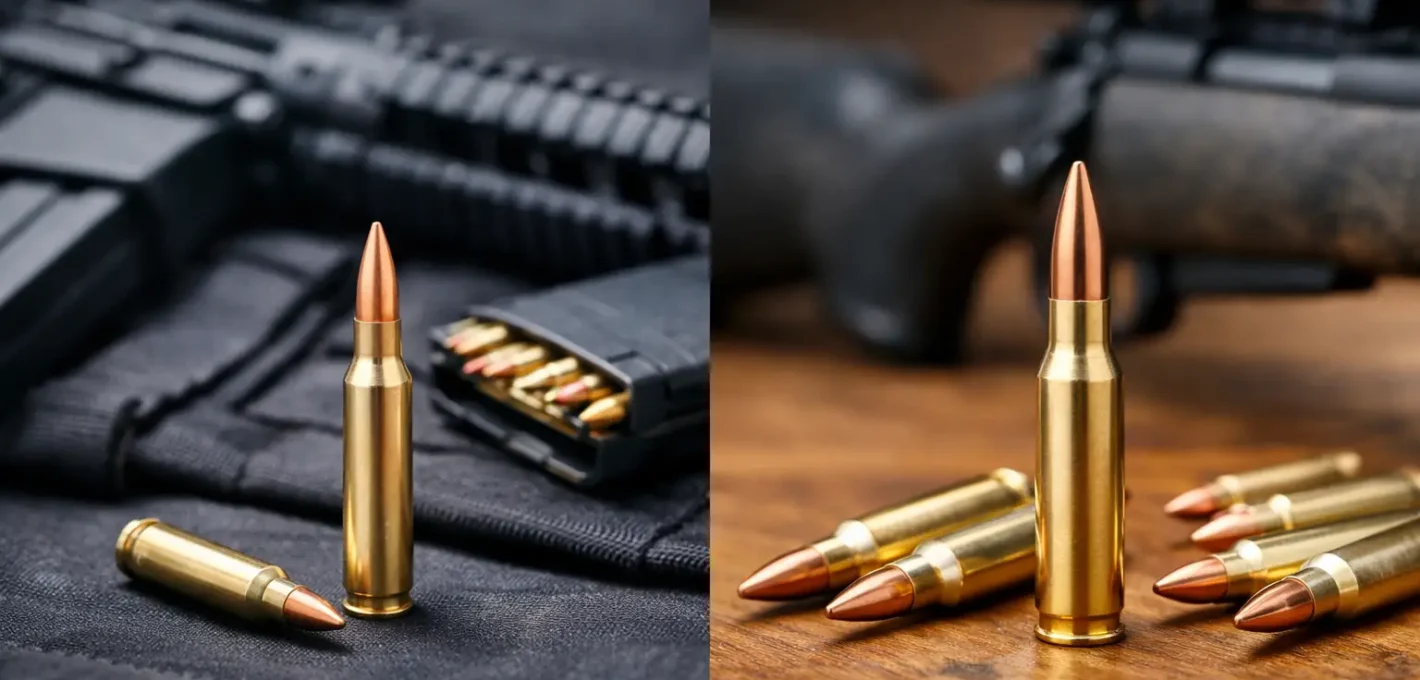

A lot of ammo debates get noisy fast, but 223 vs 308 ammo is one of the few comparisons that actually matters before you buy. These two rifle cartridges can both earn a place in your safe, yet they serve very different jobs once you get to the range, the blind, or the field. If you want better performance and fewer regrets, the right pick comes down to how you shoot, what you hunt, and how much recoil and ammo cost you are willing to live with.
223 vs 308 ammo at a glance
The shortest answer is simple. .223 Remington is lighter recoiling, typically less expensive, and excellent for high-volume target shooting, predator control, and lighter-duty applications. .308 Winchester brings more energy, better performance on larger game, and stronger long-range authority, but it asks for more from the shooter in recoil, rifle weight, and budget.
That does not make .308 automatically better. It makes it more specialized. If your goal is to spend long afternoons at the range, train consistently, or run a fast-handling rifle without getting beat up, .223 is hard to top. If your goal is deer camp, mixed hunting conditions, or a rifle that can hit harder past mid-range, .308 starts making a strong case.
What makes .223 different
The appeal of .223 starts with shootability. It is one of the most approachable centerfire rifle cartridges on the market, and that matters more than many buyers realize. Lower recoil means faster follow-up shots, less fatigue, and more confidence for newer shooters or anyone who values precision during extended range sessions.
It also tends to be easier on the wallet. When shooters compare ammo costs over the course of a season, .223 often wins by a wide margin. That lower cost can translate into more practice, and more practice usually matters more than a small ballistic advantage on paper.
Rifle selection is another major draw. The .223 platform world is broad, especially in AR-style rifles and lightweight bolt guns. That gives buyers more flexibility whether they want a practical range setup, a varmint rifle, or a defensive-style carbine.
Where .223 starts to give ground is terminal performance on larger game and retained energy at longer distances. It can be a strong option for varmints, coyotes, and in some states certain deer setups with the right bullet, but it is not as forgiving as a bigger cartridge. Shot placement becomes more critical, and hunters need to be honest about both legal requirements and real-world effectiveness.
What makes .308 different
.308 has built its reputation the old-fashioned way – by delivering consistent results across a wide range of uses. It is a proven hunting cartridge, a respected target round, and a serious option for shooters who want more authority downrange.
The biggest benefit is energy. Compared with .223, .308 hits harder and carries that power farther. For deer, hogs, and larger game within appropriate limits, it offers more confidence and better margin for error with proper bullet selection. That matters in the real world, especially when angles are less than perfect or conditions are rough.
.308 also performs well at distance. Wind drift and drop still matter, of course, but with the right load it offers strong external ballistics and reliable impact energy farther out than .223 in many practical shooting scenarios. If your definition of versatility includes both hunting and precision-style range work, .308 remains one of the premier choices on the shelf.
The trade-off is no mystery. Recoil is noticeably stronger. Rifles are often heavier. Ammo usually costs more. For some shooters, that is a fair exchange. For others, it means fewer rounds fired, slower follow-up shots, and less enjoyment over long practice sessions.
Recoil, control, and shooter comfort
This is where the comparison gets real. A cartridge can look great on a spec sheet and still be the wrong fit if you do not enjoy shooting it. .223 is easy to control, which makes it appealing for beginners, smaller-framed shooters, and experienced shooters who simply want speed and comfort.
.308 is not punishing in a properly set up rifle, but there is no getting around the fact that it demands more. If you plan to shoot from a bench for extended periods or run multiple strings in a single outing, you will feel the difference. Some shooters handle that just fine. Others develop bad habits when recoil anticipation creeps in.
If practical accuracy matters more to you than raw cartridge power, .223 often has the edge because it is easier to shoot well, more consistently, and for longer.
Hunting use: where the gap gets wider
For varmints and predators, .223 is in its element. It is fast, flat enough for practical field work, and well suited for coyotes and similar game with quality loads. It is a smart choice for hunters who want a lighter rifle and quick shots without excessive recoil.
For deer and hogs, the picture changes. While .223 can be used in some cases where legal and with proper bullet construction, .308 is the more proven and more broadly trusted hunting round. It delivers more energy, better penetration, and stronger terminal performance on medium game. If hunting is your primary mission, especially in varied terrain where shot opportunities can be unpredictable, .308 offers more confidence.
For larger game, .308 is the clear winner between the two. It simply belongs in more serious hunting conversations when body size, bone, and shot angles become bigger factors.
Range shooting and training value
If your rifle spends more time at the range than in the field, .223 deserves a hard look. It is affordable enough for routine practice, mild enough for long sessions, and available in a wide variety of loads. That makes it ideal for sharpening fundamentals, running drills, or simply enjoying more trigger time.
.308 shines at the range too, especially for shooters focused on precision, steel, or longer-distance work. But there is a cost equation attached to every magazine and every range trip. If the price of .308 makes you practice less, the cartridge’s advantages may not matter as much as you hoped.
The smarter buy is often the round you will actually train with consistently.
223 vs 308 ammo for rifle type and setup
Rifle choice can steer this decision almost as much as the cartridge itself. .223 is deeply tied to the AR-15 market, where magazine capacity, fast handling, and low recoil all support its strengths. It also works extremely well in compact bolt-action rifles built for varmints or casual target shooting.
.308 commonly shows up in bolt guns, AR-10 platforms, and hunting rifles built for more power and longer reach. These rifles are often larger and heavier, which can be a positive for stability but less ideal if you carry them all day.
That is why there is no universal answer. A lightweight ranch rifle in .223 and a scoped hunting bolt gun in .308 are built around very different experiences. Buy the cartridge that fits the rifle you want to own and the way you actually plan to use it.
Which one is more versatile?
This depends on how you define versatile. If versatility means affordable practice, easy shooting, and broad utility for targets, varmints, and recreational use, .223 is tough to beat.
If versatility means one rifle that can cover range work and serious hunting duties with more authority, .308 has the stronger argument. It reaches into more demanding use cases and handles a wider range of game animals.
The catch is that versatility on paper is not always versatility in your life. A rifle that costs more to feed and recoils more may sit in the safe more often than the lighter, cheaper option.
The smarter choice for most buyers
For first-time centerfire rifle buyers, .223 often makes the most sense. It is approachable, economical, and effective within its lane. It gives you room to learn, train, and enjoy the rifle without feeling like every range trip is a commitment.
For hunters chasing deer or hogs, or for shooters who want a harder-hitting round with more downrange authority, .308 is the stronger investment. It delivers the kind of performance that has kept it relevant for decades.
If you are shopping with performance in mind instead of hype, this is the right way to frame it: .223 is the better everyday shooter, while .308 is the better heavy-lifting cartridge. Both are excellent. The winner is the one that matches your mission, your rifle, and your budget.
A well-stocked ammo shelf gives you choices, but the best choice is the one you will trust when the shot finally matters.